
Dino King: Survival Idle
Supercent, Inc.Role Playing
4.5223.00 Reviews
- Version
- 1.3.0
- Installs
- 1.00M
- Age Rating
- Everyone
Screenshots
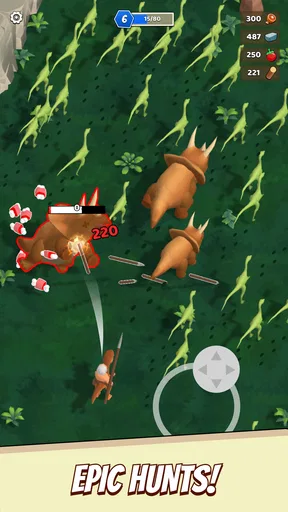
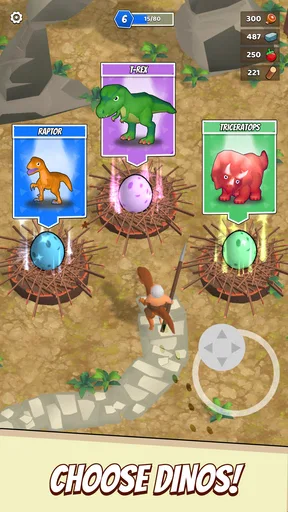
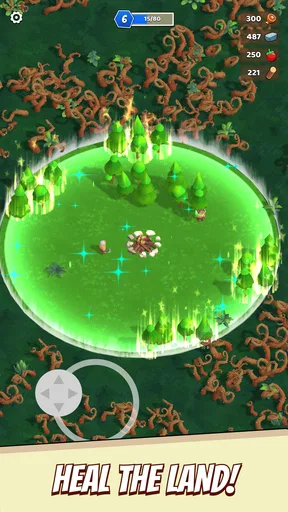
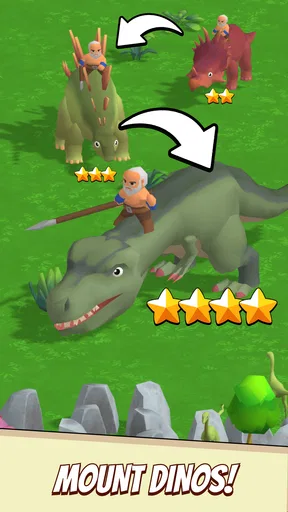
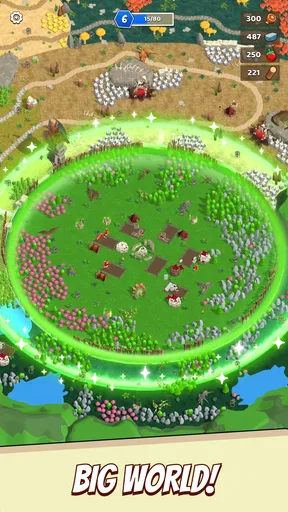
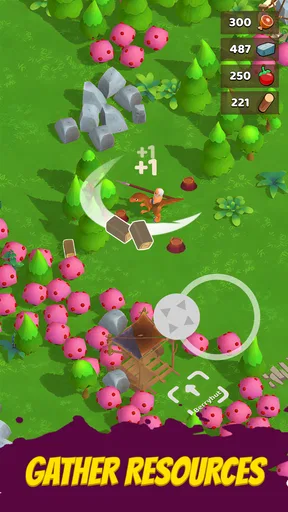
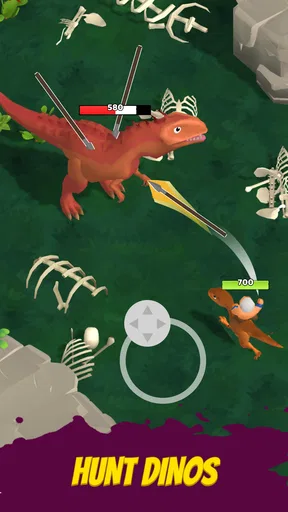
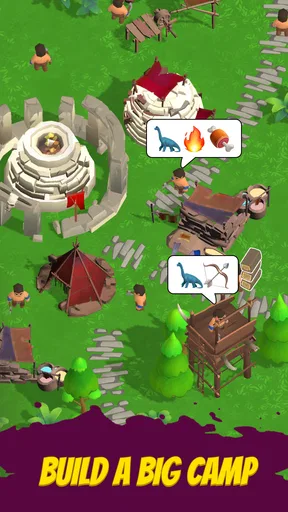
Our Review of Dino King: Survival Idle
 Analysis by Appyee
I approached Dino King: Survival Idle expecting a light role-playing game built around dinosaurs, but what stayed with me was the way it turns survival into a series of small management decisions. You are not simply watching creatures fight or tapping through a collection screen. The central question is how to grow a base quickly enough to handle the next threat without wasting the resources needed for later upgrades.
That makes it an interesting choice for players who enjoy progress that continues in short sessions. I could imagine opening it while waiting for a train, checking the base, improving one important area, and leaving again without feeling that I had abandoned a long story. At the same time, its idle structure will not satisfy everyone. If you want a deep role-playing adventure with a large world, detailed dialogue, or precise real-time combat, this is probably the wrong direction.
The game is free to start, developed by Supercent, Inc., and aimed at Everyone. It reached players on January 15, 2025, and its current version is 1.3.0. Those details matter less than the decision behind installing it: this is best understood as a compact dinosaur survival-management game with role-playing elements, not as a traditional console-style dinosaur adventure.
What I looked for before recommending it
I judge a short-session game by more than how quickly it gets going: I want to know whether its small decisions stay satisfying once the novelty wears off. Here, the useful question is whether you enjoy choosing what your settlement needs next, rather than simply checking in for rewards. That distinction sets up a closer look at the habits that make this particular survival loop worthwhile.
The real decision is about your preferred pace
My first test was simple: does the game make progress feel worthwhile when I only have a few minutes? Dino King: Survival Idle works best when I treat each visit as a planning stop. I look at what the base needs, decide which improvement has the greatest effect, and let the next stretch of progress build from there. That loop is more relaxed than a game that demands constant attention, but it still gives me a reason to return.
The word “idle” can be misleading if you expect the game to play itself completely. The appeal is not the absence of decisions. It is the separation between active choices and waiting time. I still need to decide where limited progress should go, when to strengthen my position, and whether a tempting short-term improvement is worth delaying a more useful upgrade.
That distinction is important for busy players. Someone who likes checking a game several times during the day may find the rhythm comfortable. Someone who wants every minute to contain direct action may see the same rhythm as slow. I would not choose this as my main game if I wanted constant movement, but I found its pauses useful rather than empty.
Base growth is more important than collecting for its own sake
The dinosaur theme gives the game its identity, but the base is what shapes the experience. I paid more attention to the condition of my settlement than to the simple excitement of obtaining another creature. A new addition feels most useful when it supports a broader plan: stronger defense, steadier progress, or a better chance of surviving the next difficult stage.
This creates a practical rule I would give to a new player: do not spend every reward immediately just because it is available. First ask what problem you are trying to solve. If survival is the current obstacle, an upgrade that improves your ability to endure is more valuable than a decorative or merely satisfying purchase. If progress has slowed because your base is underdeveloped, strengthening the foundation may be wiser than chasing the next flashy reward.
That may sound obvious, but idle games often encourage impulsive spending through frequent rewards. I enjoyed Dino King more once I stopped treating every reward as a command. Saving for a meaningful improvement made the next session feel more deliberate and reduced the sense that I was simply clearing buttons.
How I would judge the combat loop
I would not install this expecting the precision of a manual action game. The survival pressure is presented through preparation and improvement rather than demanding constant control. That makes the game accessible, especially on a phone, but it also limits the amount of tactical expression available in the moment.
The strongest decisions happen before a difficult encounter. I found myself thinking about whether my base was ready, whether I had improved the right parts of my setup, and whether a previous reward should be held for a larger goal. Players who enjoy optimizing around constraints should find something to consider. Players who measure depth by complicated controls or highly reactive battles may feel that the game is doing too much on their behalf.
My advice is to judge the first sessions by the quality of the planning loop, not by how much direct combat control you receive. If preparing a settlement for the next threat sounds enjoyable, the simplified action will probably feel efficient. If the preparation is only something you tolerate until the fighting begins, the game may lose its appeal quickly.
Where Dino King earns its place
For me, a game earns a regular spot when it gives brief visits a purpose without turning them into chores. Dino King’s strongest case is the way its dinosaur-survival premise gives base improvements a practical goal, so I can return with one clear priority instead of tapping through everything. The next section considers where that focused routine fits naturally into an everyday schedule.
It fits short, interrupted play unusually well
A realistic use case is a player with a crowded day who wants a game that remembers the larger goal between visits. I can start a session during a coffee break, make one or two decisions, collect what has accumulated, and stop without needing to finish a long mission. That makes it easier to fit into a routine than a story-heavy role-playing game that punishes interruptions.
The best time to play is not necessarily when you have the most free time. It is when you want a small planning task. I liked having a clear reason to return without needing to reserve an entire evening. The game can sit alongside a more demanding title rather than competing with it for every spare minute.
The dinosaur setting gives the management loop a clear purpose
Many idle games can feel interchangeable because their numbers and upgrade screens lack a strong emotional frame. Here, the survival setting gives the improvements a more understandable context. Building up a base is not just an abstract climb; it is preparation for a world where defense matters and the next danger is part of the fantasy.
I also think the dinosaur theme makes the game easier to recommend to younger players and families, especially because its content rating is Everyone. That does not mean every child will enjoy the waiting and resource decisions, but the premise is approachable. It avoids requiring the player to understand a complicated fictional history before the basic goal becomes clear.
It offers a gentler entry into role-playing systems
For someone who finds large role-playing games intimidating, Dino King provides a smaller set of priorities. You can focus on strengthening the base and surviving rather than learning a huge map, memorizing a long list of abilities, or following an elaborate quest chain. I see it as a possible bridge between very casual mobile games and more involved progression games.
That simplicity is also one of its most useful strengths for a phone. The game does not ask me to hold a complicated mental model while I am away from home. I can return after a gap, inspect the current situation, and usually understand what needs attention next. That clarity makes the experience welcoming even when the survival pressure increases.
Small-session planning is where the game feels smartest
One non-obvious strength is how much better the game becomes when I divide goals into stages. Instead of trying to improve everything, I choose a single bottleneck. If defense is holding me back, I focus there. If the base is progressing but rewards are being wasted, I pause spending and build toward a more useful threshold. This approach turns a potentially repetitive loop into a series of manageable experiments.
I also found that returning with a plan is more satisfying than opening the game simply to collect. Before closing a session, I decide what the next visit should accomplish. That habit reduces aimless tapping and makes the idle time feel like part of the strategy rather than dead space.
The audience response suggests a healthy starting point
The game holds a 4.5 average from around 5.3 thousand ratings, with more than 1 million installs. I read that as a sign that the basic loop is connecting with a substantial mobile audience, though popularity alone does not guarantee that its pace will suit you. The smaller review count, at over 200 reviews, also reminds me to treat broad approval as a useful signal rather than a personal guarantee.
For me, the important takeaway is that the game has enough reach to feel like an established starting point for this particular style of dinosaur survival play. I would still make the decision based on your tolerance for idle progression, because that is the feature most likely to divide players.
Where another type of game may fit better
The appeal depends heavily on what you want from a role-playing game, so I would not recommend it just because you like dinosaurs. If your ideal session means exploring a story, controlling every fight, or relaxing with almost no decisions, another style may be a better match. I’ll compare those preferences directly, because choosing the right alternative is part of deciding whether this game deserves your time.
Choose a traditional role-playing game for story and character depth
If your priority is a long narrative, memorable companions, dialogue choices, or a world to explore directly, I would look at a conventional role-playing game instead. Dino King keeps its attention on survival progress and base development. That focus helps it stay accessible, but it leaves less room for the personal storytelling that defines larger adventures.
The trade-off is straightforward. This game gives me a compact loop that is easy to resume. A story-led alternative may demand more time and concentration, but it can offer stronger emotional investment. Neither approach is automatically better; they answer different moods. I would choose Dino King for quick planning and a larger adventure when I wanted discovery and narrative momentum.
Choose an action game if direct control is your main pleasure
Players who want to dodge, aim, combine attacks, or react to enemies themselves may find the combat too passive. The game’s identity is built around preparation, upgrading, and survival management. That means the most satisfying moment often comes from seeing a previous decision pay off, not from executing a difficult move at exactly the right time.
I would especially steer competitive action players toward another category if they need skill expression in every encounter. Dino King is more forgiving and more convenient, but convenience comes with less control. Its best audience is comfortable influencing outcomes through setup rather than demanding complete command once a fight begins.
Choose a pure idle game if you want almost no management
There is another important comparison: some idle games are designed mainly around automatic accumulation and frequent claiming. Dino King asks for more attention than that because the base and survival purpose give your resources a direction. If you want to open an app, collect everything, and leave without considering priorities, an even simpler idle title may feel more relaxing.
On the other hand, that extra layer is exactly why I prefer this game to an entirely passive loop. I have something to evaluate. The game is not asking for the intensity of an action title, but it does ask me to care about what comes next.
Be realistic about the free-to-play boundary
The game is free, with in-app purchases ranging from $1.99 to $99.99 per item. That wide range is worth considering before you begin, even if you intend to spend nothing. I recommend deciding in advance whether you are playing as a no-spend experiment, allowing only occasional small purchases, or treating optional spending as part of the experience.
My practical tip is to avoid buying simply because progress has slowed for a few minutes. In an idle survival game, a slowdown can be a signal to rethink your upgrade order rather than an instruction to pay. If you do spend, make sure the purchase solves a problem you understand. Otherwise, it is easy to pay for speed without improving your enjoyment of the actual loop.
The cost of changing your mind
A free starting point makes trying the game straightforward, but staying comfortable with it also means being intentional about purchases and expectations. I find it useful to separate a genuine planning problem from impatience with waiting; that helps keep spending from becoming a reflex. The following section looks at the practical trade-offs of stepping away or switching to a different kind of game.
What you give up when moving from a deeper game
Switching from a full role-playing adventure to Dino King means accepting less direct exploration and a lighter sense of character development. You may gain convenience, but you lose some of the texture that makes a long game memorable. I would not call that a flaw in isolation; it is the cost of choosing a smaller format.
The change can be worthwhile if your current game is too demanding to maintain. A title that constantly asks for long sessions may offer more content but deliver less actual enjoyment if you rarely have time to play it. Dino King’s value appears when the alternative is not “a better game,” but a game you keep postponing because it does not fit your day.
What you give up when moving from a simpler idle game
Moving in the other direction has a different cost. Dino King requires more thought than a basic collection loop, so it may feel less effortless. You cannot rely only on opening the game and accepting every available improvement. The base gives your activity a structure, and that structure asks you to make choices.
I see this as a reasonable exchange for players who have grown bored with purely automatic progress. The game remains approachable, but it gives the waiting period a purpose. If your ideal mobile game is completely frictionless, however, the additional decisions may feel like work rather than play.
How to avoid wasting your early progress
My most useful early habit was to identify the current bottleneck before spending. I would ask whether the problem was weak defense, slow development, or poor timing around the next challenge. That single question helped me avoid scattering resources across improvements that looked attractive but did not change my immediate situation.
A second habit was to leave a small reserve instead of ending every session at zero. I found that keeping some flexibility made the next decision easier, particularly when the game presented a new need soon after I had committed to an upgrade. This is not about hoarding everything; it is about avoiding a base that is technically improved but unable to respond to the next problem.
Finally, I would not judge the game after one rushed session. Its strengths appear when the idle cycle and active planning work together. Give it enough time to see whether preparing for the next survival step feels satisfying. If the pauses still feel empty after that, no amount of theme or progression will make it the right fit.
My recommendation for the right player
My recommendation comes down to whether you enjoy the routine as much as the dinosaur theme: short visits, measured upgrades, and a little forward planning. I would give it space in my day if that rhythm feels rewarding, but I would not force it into a routine just to preserve progress. The final section brings those preferences together into a clear guide for deciding who is likely to stick with it.
Who should install it
I recommend Dino King to players who like dinosaurs, gradual base building, and role-playing progression that can be handled in short visits. It is particularly suitable if you want a game that can live beside work, study, commuting, or family responsibilities without demanding a complete uninterrupted session.
I also think it is a good match for people who enjoy making small optimization choices. You do not need to be an expert strategist, but you should enjoy asking which improvement matters most right now. The game rewards patience and prioritization more than frantic input.
Who should skip it
I would skip it if your main requirement is a cinematic story, open exploration, or highly technical combat. I would also be cautious if you dislike waiting for progression or feel uncomfortable with free-to-play games that include optional purchases. The free entry is helpful, but the presence of purchases means you should approach the game with a spending boundary that you control.
It may also disappoint players who want a game that becomes dramatically more complex over time. Its appeal comes from refining a focused loop, not from constantly changing into a different genre. If you need new mechanics every few minutes, a larger role-playing or strategy title may hold your attention better.
My final verdict
After spending time with it, I see Dino King as a focused mobile role-playing game that understands the value of short sessions. Its dinosaur setting is inviting, its base gives the idle progression a reason to exist, and its survival theme makes each improvement feel more purposeful than a bare number increase. The game is at its best when I plan around a bottleneck, save for a meaningful step, and let the waiting period support the next decision.
It is not a replacement for a deep adventure or a hands-on action game, and that is the key to choosing it honestly. Install it if you want relaxed survival planning with dinosaurs; skip it if idle progress feels like a compromise rather than a feature. With its Everyone rating, free starting point, and accessible structure, it is easy to try. Just keep your expectations—and your purchase limit—aligned with the compact, management-first experience it actually offers.
Verdict
Strengths of Dino King: Survival Idle
- Easy idle progression with rewards earned while you are offline.
- Dinosaur collection offers plenty of creatures to unlock and upgrade.
- Simple controls make it accessible for casual players of all ages.
- Short play sessions fit well into busy schedules.
- Colorful prehistoric visuals give the game a friendly, polished look.
Limitations of Dino King: Survival Idle
- Progress can feel slow without frequent upgrades or resource spending.
- Repeated battles may become monotonous after extended play.
- Limited strategic depth may disappoint experienced strategy players.
- Online features or rewards may depend on a stable internet connection.
- In-app purchases can make faster progression more tempting.
Other Releases by Supercent, Inc.
View All
Snake Clash!
Arcade4.5

Pizza Ready!
Simulation4.4

Prison Life: Idle Game
Role Playing4.0

Dessert Factory Idle
Arcade4.7
Similar Picks in This Category
View All
Hair Dye
CrazyLabs LTD4.4

Monster High™ Beauty Salon
CrazyLabs LTD4.5

Bus Simulator - Bus Games 3D
Jima Apps4.4

Flight Pilot: 3D Simulator
Wildlife Studios4.1


Super Stylist Fashion Makeover
CrazyLabs LTD4.4
Frequently Asked Questions
What is Dino King: Survival Idle?
Dino King: Survival Idle is a casual survival and progression game built around dinosaurs, automatic battles, and resource management. You develop your prehistoric team, improve its abilities, and face increasingly difficult enemies and stages. Because much of the progress continues through idle mechanics, it is suitable for players who enjoy short sessions as well as regular long-term upgrading.
How does the idle progression system work?
The game allows your dinosaurs to continue collecting rewards and making progress even when you are not actively playing, depending on the available features and stage progression. When you return, you can claim resources, strengthen your team, unlock improvements, and attempt more challenging content. Active play is still useful for choosing upgrades, completing missions, and managing battles efficiently.
Does Dino King: Survival Idle require an internet connection?
An internet connection may be needed for certain functions, such as downloading game data, synchronizing progress, displaying advertisements, accessing events, or processing in-app purchases. Some basic gameplay may work offline, but availability can vary by version and device. It is best to launch the game online at least occasionally so rewards and account progress can synchronize correctly.
Is Dino King: Survival Idle free to download and play?
Dino King: Survival Idle is generally available as a free download, but it may include optional in-app purchases and advertisements. You can usually progress without spending money, although purchases may provide extra resources, convenience items, or faster development. Players should review the store listing and device payment settings, especially if children may have access to the game.
Is the game suitable for children and casual players?
The simple controls, dinosaur theme, and automated combat make Dino King: Survival Idle approachable for casual players. However, the game may include advertisements, competitive systems, timed rewards, and optional purchases, which parents should check before allowing younger users to play. The overall experience is more focused on upgrading and repeated progression than on complex controls or story-driven gameplay.
Play our best games!


